01 JAN 2025
Pressure Horns: When Catching Attention in Traffic Was a Gesture
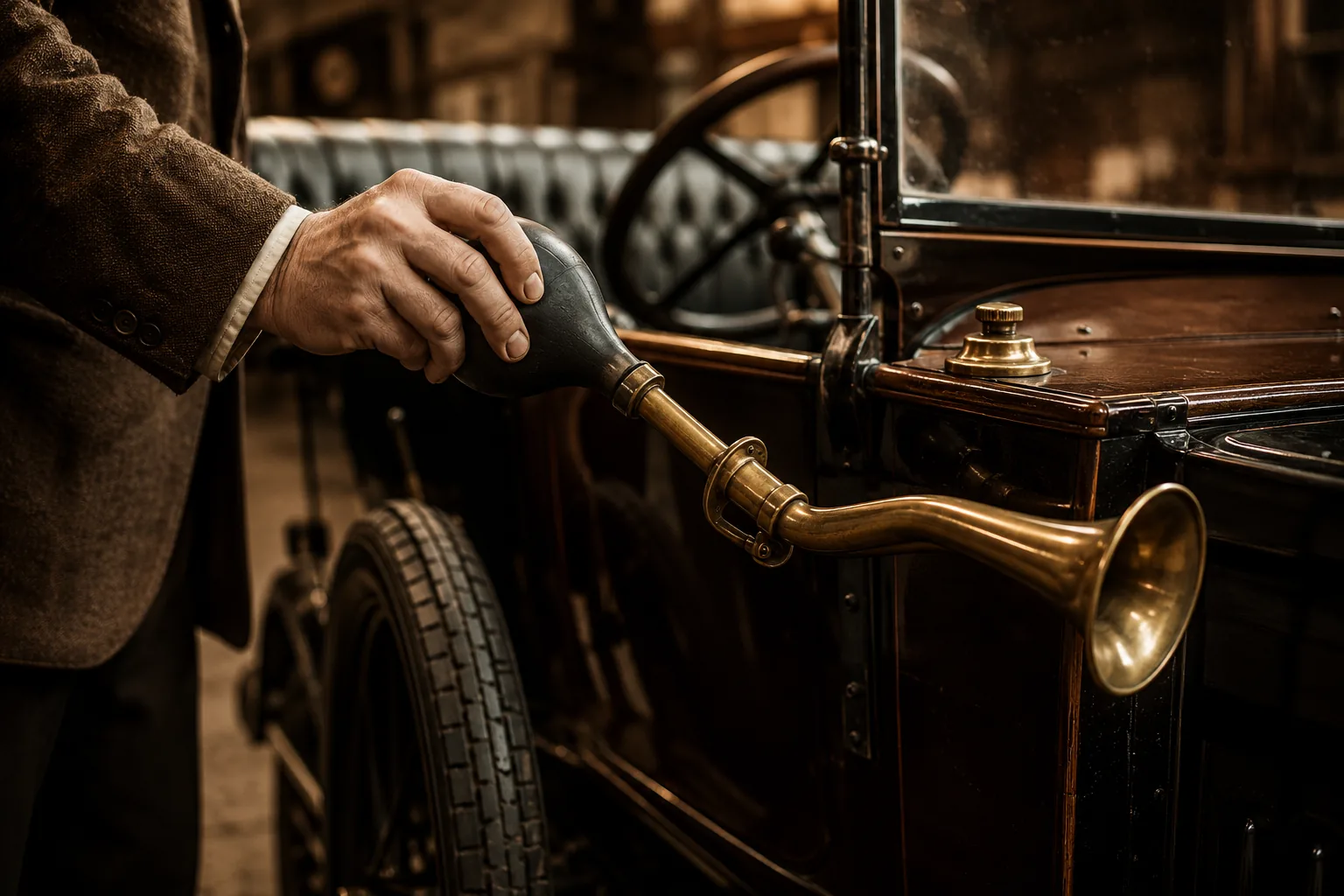
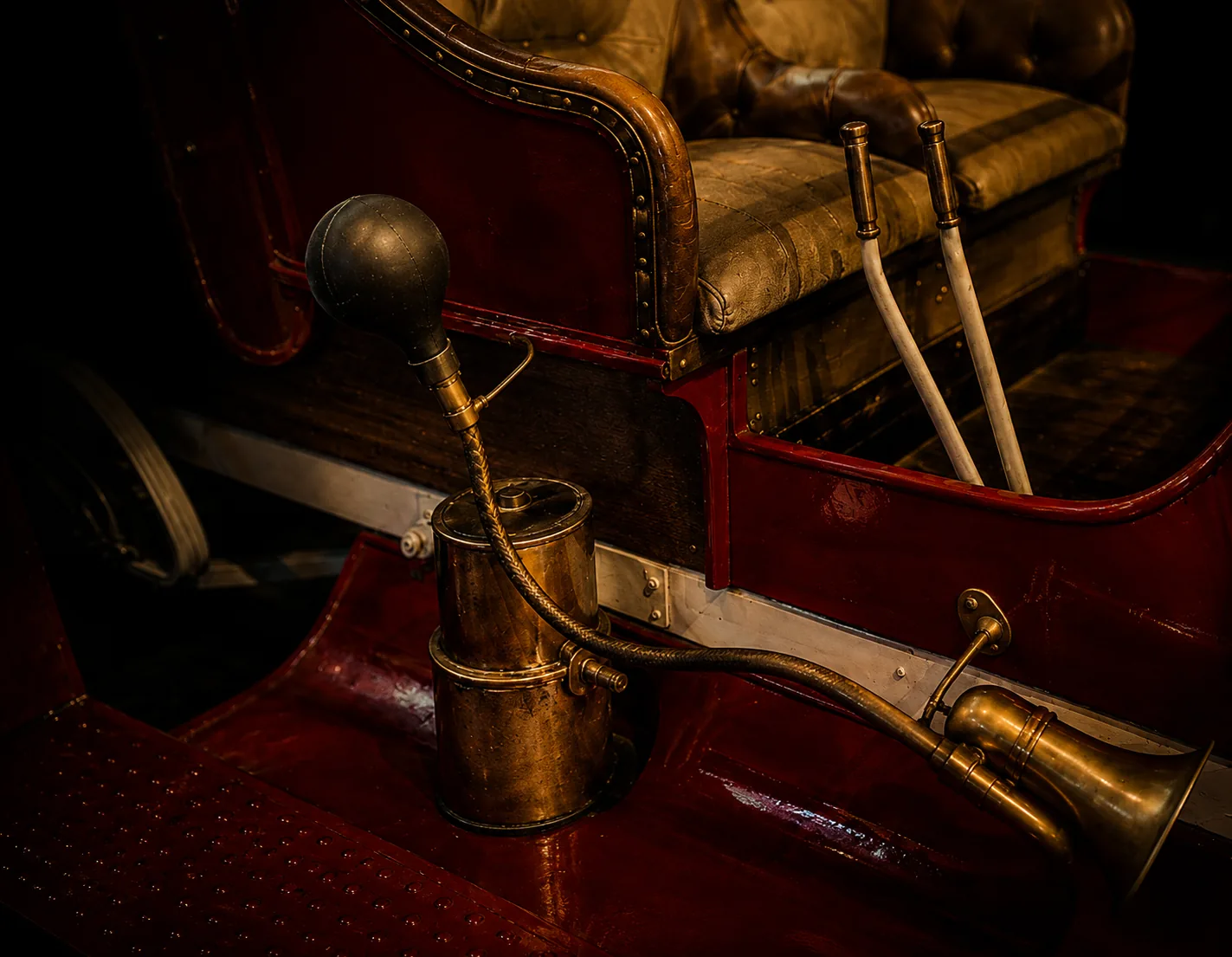
Long before any steering wheel button or electronic signal, catching attention in traffic literally required sticking your hand out of the car. Pressure horns — those rubber bulb horns you'd squeeze with the palm of your hand — were among the first sound features in automotive history, and they reveal a lot about how the relationship between man and machine began.
The need to alert pedestrians and animals existed well before cars. In the 1880s, in the UK, carriages were so frequently involved in accidents that it became mandatory for each one to be accompanied by a man holding a red flag and a horn. Practical it was not. But it was from this context that the demand for an onboard sound signal arose.
Early cars already featured horns consisting of a small rubber bulb attached to a trumpet. Unlike today, where it's mainly used at traffic lights, its primary function was to alert unsuspecting pedestrians and animals.
The great leap came in the early 20th century. American entrepreneur Claud H. Foster was inspired by his trumpet to create a multi-sound device he called the "Gabriel Horn" in 1900. It was a massive success — the novelty was installed on the outside of cars and played by hand from the exterior. It wasn't until 1914 that this device was replaced by an electric horn, activated by a button inside the car, patented by Bosch.
The classic design of the electromechanical horn, based on the principle of an electromagnetic converter, has remained practically unchanged for over a hundred years. It's impressive to think that such a simple component survived decades with virtually no changes while the car around it evolved completely.
Pressure horns were much more than a safety device. They were part of a much more visceral, mechanical, and human driving experience. Each model had its own tone, its own way of sounding. Today they are collector's items, relics that recall a time when every detail of the automobile had its own personality — and the driver had to put their whole body into it.